











All our hiking trails
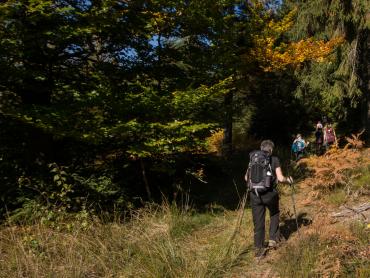
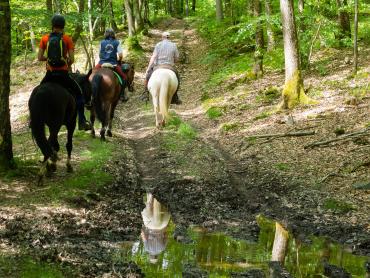
The hiking trails in the Ardennes are as diverse as the landscapes they traverse. Whether you are looking for a peaceful hike in the heart of the forest, along a river or through authentic villages, the Ardennes offers a multitude of choices! The routes are adapted to your level and your desires.
Choose your hike, put on your boots and enjoy!

Practice type
Walking
120h
Horse
60h
Walk of Ligny 1815

Follow in the footsteps of the armies of 1815 in Ligny, the site of Napoleon I's final victory. It was on June 16, 1815, two days before the Battle of Waterloo. This fierce battle pitted the French, commanded by Napoleon I, against the Prussians led by Blücher. From several exceptional vantage points, you will understand the course of operations in and around the village: the French movements from Fleurus, the occupation of the village by the Prussians, and their retreat routes. This historical and signposted walk is offered by the Ligny Tourist Office and the non-profit organization "Les Amis de Ligny." It highlights all the military heritage present in the heart of the village. You will also discover the gentle Ligne Valley and the habitat of the Hesbaye region of Namur. Enjoy your journey through history!
Designer
The route was designed by Syndicat d'Initiative et de tourisme de Ligny-Sombreffe
Signalétique (EN)
No signage
Difficulty
Duration
120h
Dist.
8 km
Practice type
Walking
120h
Horse
60h
Show more information
À proximité
Nearby tours
Nearby of points of interest
Map background choice

IGN Map

Aerial Photos / IGN

Slope Map (IGN Plan)

Map 1950 / IGN

State Major Map (1820-1866)

Open Street Map
Lat : 50.51407Lng : 4.57983
Coordinates copied

Terra Curiosa
Author

Ligny Canon
Places of interest
Ligny, 5140
The Saint-Lambert church in Ligny
Places of interest
Ligny, 5140
Ligny 1815 Museum
Places of interest
Ligny, 5140
AlertAlerts
Powered by Cirkwi - Read Terms of Use