







All our hiking trails
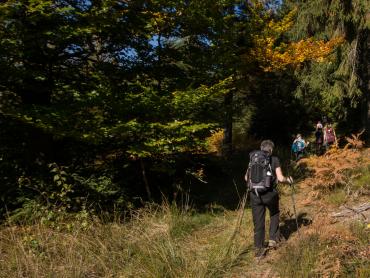
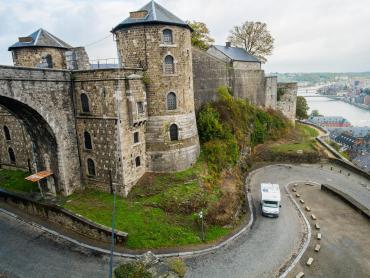
The hiking trails in the Ardennes are as diverse as the landscapes they traverse. Whether you are looking for a peaceful hike in the heart of the forest, along a river or through authentic villages, the Ardennes offers a multitude of choices! The routes are adapted to your level and your desires.
Choose your hike, put on your boots and enjoy!

Practice type
Walking
2h
Nassogne, Local Village

This walk through the village of Nassogne will help you discover its history and heritage.
Unmarked route - 5.5km or 7km - Nassogne.
Roadbook available for sale at the Office Communal du Tourisme de Nassogne.
Designed by: Office Communal du Tourisme de Nassogne
Walking
Difficulty
Duration
2h
(1d)
Dist.
5.2 km
Practice type
Walking
2h
Show more information
À proximité
Nearby tours
Nearby of points of interest
Map background choice

IGN Map

Aerial Photos / IGN

Slope Map (IGN Plan)

Map 1950 / IGN

State Major Map (1820-1866)

Open Street Map
Lat : 50.12858Lng : 5.34214
Coordinates copied

Office communal du Tourisme de Nassogne
Author

Office Communal du Tourisme de l’Entité de Nassogne
Information
3 rue de Lahaut 6950 Nassogne
La Mauvaise Herbe SC
Producers and artisans
7 Place Communale 6950 Nassogne
Meat curing craftsmen Magerotte
Producers and artisans
11 rue de Lahaut 6950 Nassogne
E-bikes rental
Services
3 Rue de Lahaut 6950 Nassogne
Etang des Goffes
Places of interest
Le château d'eau a été construit en 1928. Repeint et décoré fin des années 90 par Serge Nanson, on y découvre les animaux aquatiques et migrateurs de la région.
L'étang "Les Goffes" est le rendez-vous des pêcheurs.
6950 Nassogne
Aire de pique-nique - Nassogne - Plaine de jeu
Places of interest
7 Rue des Clusères 6950 Nassogne
Village de Nassogne
Places of interest
On entend parler de Nassogne depuis l'an 600 et le village devrait son nom à une petite fontaine appelée "Nassonia". A cette époque, un moine écossais du nom de Monon vint évangéliser la région. L'histoire raconte que le missionnaire fut frappé à mort entre 630 et 645. Vers 687, Pépin de Herstal, dit le Bref, rehaussa l'église, où le tombeau du moine écossais attirait la vénération de pélerins, en y fondant financièrement un chapitre de chanoines, l'église devenant alors collégiale.
38 Rue de Coumont 6950 Nassogne
The Saint-Monon collegial church
Places of interest
The Saint-Monon collegiate church, its ancient churchyard and picturesque lane of linden trees planted in 1803, have all been listed by the Royal Commission for Sites and Monuments. The church underwent restoration works in 1948-49 and, according to the chronogram above the entrance porch, the current building dates from 1661. The choir and the apse are built in typical 7th century Romanesque styleand the church nave was rebuilt in 1661.An educational board near the church entrance tells the story of the Holy Monon, a Scottish Monk whocame to Nassogne to evangelize our ancestors around 600. Inside the church, you can admirethe reliquary which contains the holy relics. Saint Monon is the Patron Saint of farmers who invokehis protection for their cattle and their crops. Each year (on the Sunday following Ascension), the reliquary is taken from the collegial church to the Saint-Monon chapel, during the procession that is locally known as the Procession des Remuages (i.e. ‘the riddling procession’). During the procession, the pilgrims, for the vast majority farmers, rub the shrine with handfuls of grass or shrub branches. The blessed crops are then fed to their livestock, in the hope that this will protectthem from harm until the following year.
4 Rue du Parvis 6950 Nassogne
AlertAlerts
Powered by Cirkwi - Read Terms of Use