All our hiking trails
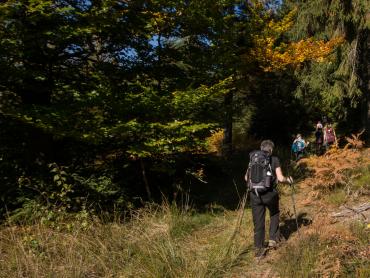
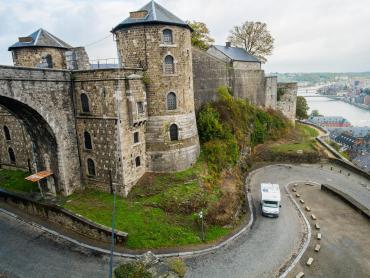
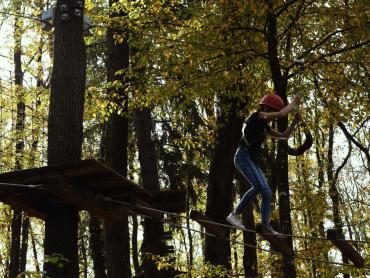
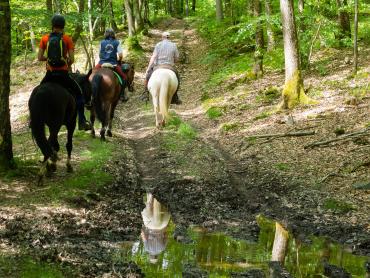
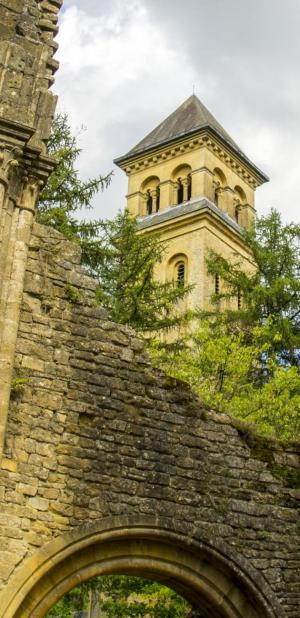
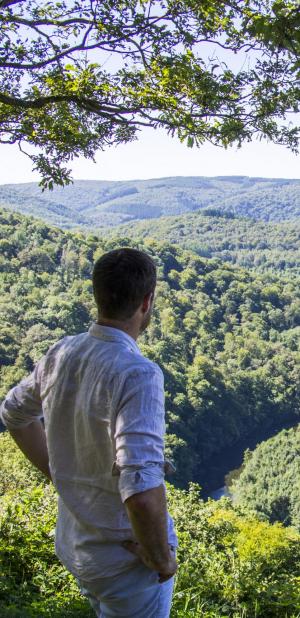
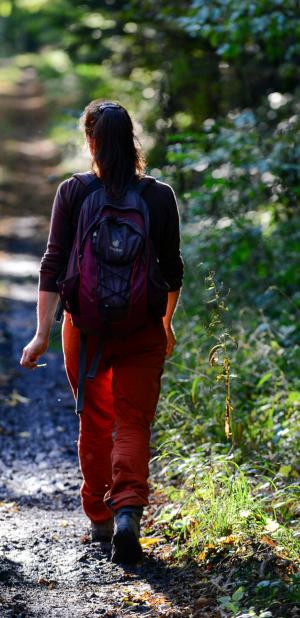
The hiking trails in the Ardennes are as diverse as the landscapes they traverse. Whether you are looking for a peaceful hike in the heart of the forest, along a river or through authentic villages, the Ardennes offers a multitude of choices! The routes are adapted to your level and your desires.
Choose your hike, put on your boots and enjoy!
Women & Heritage - Villas in Spa


Thanks to the beauty of its site and its mineral springs with curative virtues, Spa very quickly developed important infrastructures
infrastructure directly linked to thermalism: thermal baths, playhouses, covered galleries, hotels, etc. In addition to these facilities, a new type of architecture also appeared in the spa town: the villa. From the end of the 19th century onwards, these were built on the outskirts of the urban core as second homes, offering a worldly image of the spa. This resort phenomenon lasted for several decades.
According to a census carried out in Spa in 1903, there were more than 300 villas with identified signs. In fact, a
name often personifies them: a family name, a wife's first name, a reference to a characteristic of the place. Some
villas bear a woman's first name. Here's an invitation to discover them and identify their characteristics. Many villas have been known by a particular name since they were built.
changed their name, often with the arrival of a new owner. Others simply no longer have a name to identify them visually on their facade. Archives, postcards and old views can help us rediscover the trace of these names.
The term villa, associated with spa towns and seaside resorts
refers to an elegant house located close to the town and surrounded
surrounded by lush greenery. Certain architectural elements are systematically found here. The upper floor or ground floor opens onto a wide terrace, and balconies
balconies stretch along the facades, and there are plenty of bow windows to take advantage of nature and the landscape. Large overhanging roofs protect the façades and rest on wooden
wooden brackets. The general layout is often irregular, and the building materials are traditional. False half-timbering, consisting of painted plaster, is very popular in Spa.
We invite you to discover our spa town, the birthplace of the spa tradition that gave its name "Spa" to spa towns the world over. A founding member of the Association of European Historic Thermal Towns, Spa
has been on UNESCO's World Heritage List since July 2021, alongside ten other exceptional spa towns. It is precisely this heritage, linked to women, that we invite you to discover along this route, whose villas described are arranged in alphabetical order by street name.
Villas in Spa
1. VILLA DE L’AMBLÈVE, Avenue de Barisart, N°162
2. VILLA MADONA, Avenue de Barisart, N° 208
3. VILLA SANTA MARIA, Avenue de Barisart, N°211
4. VILLA ALEXANDRA, Boulevard Chapman, N°1
5. LES QUINTUPLÉES, Avenue Clémentine, N°12 à 20
6. VILLA ORIZABA, Avenue Clémentine, N°26
7. VILLA MARIE-THERESE, Promenade Hanrion, N°2
8. VILLA SOPHIA, Boulevard Lühr, N°24
9. VILLA MARIE-HENRIETTE, Avenue Marie-Henriette, N°5
10. VILLA MARGUERITE, Rue Gilles Ouda, N°7
11. VILLA MADELEINE, Route de Préfayhai, N°1-1a
12. VILLA CECILE, Avenue Professeur Henrijean, N°3
13. VILLA IDA, Avenue Professeur Henrijean, N°18
14. VILLA LILIA, Avenue Professeur Henrijean, N°26
15. VILLA LA BUISSONNIÈRE, Avenue Professeur Henrijean, N°63
16. VILLA FANNY, Avenue Reine Astrid, N°45
17. LE VERT BOIS, Avenue Reine Astrid, N°47
18. VILLA GERMAINE, Avenue Reine Astrid, N°141
19. VILLA EMMA, Avenue Reine Astrid, N°144
20. VILLA LEA, Avenue Reine Astrid, N°182-184.
HOUBRECHTS, David, Home, sweet home … Les villas de Spa, Liège, Les éditions de la Province de Liège, 2020
MARCHAL, Martine, Balmoral, quartier spadois, un patrimoine architectural et naturel, dans, B.I.A.L., t. CXXIV (2020), p.201-230.
JEHIN, Pol (sous la direction de), Connaître Spa, 7, De villas en châteaux par avenues et boulevards, Spa, 2003.
RÉGION WALLONNE – AWaP, Inventaire du Patrimoine Culturel Immobilier, 2017.
Signalétique (EN)
No signage

IGN Map

Aerial Photos / IGN

Slope Map (IGN Plan)

Map 1950 / IGN

State Major Map (1820-1866)

Open Street Map

VILLA MARGUERITE - Rue Gilles Ouda, N°7
As in the mountains, it is reached via a narrow lane leading to Balmoral, through the wooded hillsides. Chalet Marguerite owes its name to Jules Blaton, whose wife was called Marguerite. A stone slab set into the masonry of the façade is a reminder of this. Covered by a large overhanging roof, the villa is reminiscent of high mountain chalets, with a rustic yet picturesque feel thanks to its wooden shutters on the windows, its terrace, its lace-like balcony and its overhanging small garden offering a superb view of the town.

LE VERT BOIS - Avenue Reine Astrid, N°47
Directly adjoining Villa Fanny, Vert Bois is a pretty corner villa overlooking the Promenade de Sept heures. It was built by a woman in 1850. The villa has a small garden enclosed by a low wall and gates with finials at the ends of the bars. A corner veranda extended by a canopy adorns the house, which has retained its original interior décor. A second veranda, with its elegant curved roof, rests against the left gable and has recently been restored.The veranda, a small room on the ground floor, is entirely glazed, allowing you to enjoy the view towards the park. It's a great way to enjoy nature in an urban environment. The marquise is a glazed ironwork canopy designed to protect the open space in front of an entrance.

VILLA FANNY - Avenue Reine Astrid, N°45
This façade features an astonishing bow window. This is an overhanging structure, usually three-sided, housing a small room and often topped by a balcony. The joinery here is remarkably sculpted. The bow window rests on two pairs of equally decorated brackets, reminiscent of Gothic modillions. This design alone is the essential feature of this dwelling. Its decoration contributes greatly to the interest of the building.

VILLA EMMA - Avenue Reine Astrid, N°144
Built in 1855, Villa Emma is notable for its rich Art Nouveau décor, created on the initiative of the mother of Liège poet Félix Bernard, Madame Bernard-Kepenne. Admire the entrance door, the wrought-iron window armrests, the richly decorated loggia in the centre of the façade with its floral motifs, the glazed ceramic bands adorned with tulips and the elegant veranda set against the left gable. Appropriately, the villa is accompanied by a garden, here enclosed by railings with bars ending in spikes.

VILLA LEA - Avenue Reine Astrid, N°182-184
Villa Léa and its twin, Villa Pol, are preceded by a small garden and a courtyard enclosed by a gate. Of neo-classical inspiration, they feature a rendered and painted façade enlivened by horizontal bands. Elegant stoops bounded by wrought-iron railings lead to the entrances via a small terrace protected by an attractive canopy with a cast-iron fascia.A number of other Spadois villas are of particular interest and should be given pride of place. While the most interesting are listed in the Inventaire du Patrimoine Immobilier Culturel de Wallonie (IPIC), none are yet officially protected by the classification.Villas contribute to the charm and beauty of Spa and its surroundings. An image of a sumptuous past, this type of building linked to spa towns deserves all our attention.

VILLA GERMAINE - Avenue Reine Astrid, N°141
Overlooking the avenue, Villa Germaine is an imposing building dating from 1895. It is notable for its square tower with cut-off corners and features the characteristic elements of the Spadian villa: balconies, a gable with an overhanging truss visible from the road and a covered wooden exterior gallery. The garden features an artificial grotto and moulded cement boulders.The overhanging truss is a frame truss assembled in a triangle to support the slopes of the roof overhanging a gable. The timbers that make up the truss are often decorated with leafy motifs.

LES QUINTUPLEES - Avenue Clémentine 12 - 20
Bordering the avenue, these five semi-detached houses, formerly known as Les Quintuplées, were originally named after women. Villa Gabrielle (No. 12), Villa Juanita (No. 14), villa Jenny (No. 16), villa Nelly (No. 18) and villa Colomba (No. 20). They were later renamed.These 5 villas form a group whose overall symmetrical composition is centred on the central building (N°16). Higher up, it features a remarkable decoration consisting of a head in the round in a large medallion, floral motifs and draperies. A small triangular pediment crowns the façade. On either side of this house, the two adjoining buildings each feature a remarkable balcony with metal railings and brackets and metal lintels, punctuated with discs and crowned with masks and foliage. The two end houses feature a large dormer window covered by a high roof. This category of semi-detached houses differs from villas in that it is built on a narrow plot of land, while still using the architectural vocabulary associated with villas.

VILLA ORIZABA - Avenue Clémentine 26
Bordering the avenue, these five semi-detached houses, formerly known as Les Quintuplées, were originally named after women. Villa Gabrielle (No. 12), Villa Juanita (No. 14), villa Jenny (No. 16), villa Nelly (No. 18) and villa Colomba (No. 20). They were later renamed.These 5 villas form a group whose overall symmetrical composition is centred on the central building (N°16). Higher up, it features a remarkable decoration consisting of a head in the round in a large medallion, floral motifs and draperies. A small triangular pediment crowns the façade. On either side of this house, the two adjoining buildings each feature a remarkable balcony with metal railings and brackets and metal lintels, punctuated with discs and crowned with masks and foliage. The two end houses feature a large dormer window covered by a high roof. This category of semi-detached houses differs from villas in that it is built on a narrow plot of land, while still using the architectural vocabulary associated with villas.

VILLA SOPHIA - Boulevard Lühr 24
Set in a garden enclosed by gates each bearing the initial S, Villa Sophia was built in 1907. Part of the sandstone rubble masonry is covered in painted rendering simulating pan-de-bois, reminiscent of Anglo-Norman style buildings. The villa is typical of the "villégiature" style, with its wooden porch protecting the entrance, its three-sloped bow window and its balconies with wooden railings allowing you to enjoy the garden.

VILLA CECILE - Avenue Professeur Henrijean, N°3
Like all the villas on this avenue, Villa Cécile is surrounded by a vast garden enclosed by hedges. Built at the beginning of the 20th century, it is constructed mainly of sandstone rubble, with a wood-panelled top floor. The entrances are preceded by stoops sheltered by wooden porticoes. The main entrance porch is topped by a small wooden balcony.The garden still occupies an important place around the villa. Surrounded by gates or hedges, it is designed to showcase the villa while protecting it from the outside world. Trees and shrubs of local species provide shade in summer, while paths and lanes lead to flowerbeds and sometimes a pond.

VILLA IDA - Avenue Professeur Henrijean, N°18
Set in a garden enclosed by hedges, gates and a wooden gate, this villa was built in 1903. It is a sandstone rubble house, with some of the gables covered in plaster imitating half-timbering. It was also called Villa Alcyon, after a bird from Greek mythology, a sign of good fortune.The rigorous neo-classical layout is now rarely used as a benchmark for the construction of villas on the avenue. Complex and more irregular volumes diversify the facades, which externalise the functions of the interior rooms.

VILLA LA BUISSONNIERE - Avenue Professeur Henrijean, N°63
Surrounded by a large garden, this remarkable early 20th century villa was named "Ma Jacquy" after the daughter of the owner, an industrialist from Liège, Mr Deitz, mayor of Spa in 1933. He named the neighbouring farm at the back of the property "La Francinette", after his second daughter. The building contains all the characteristic features of the Anglo-American-inspired villas of Spa. Spadoise villas of Anglo-Norman inspiration: irregular floor plan with numerous setbacks, sandstone rubble masonry, half-timbering, porticoes, wooden awnings and balconies, overhanging roofs with dormer windows and finials. The terrace is adorned with a remarkable Art Deco style with a glazed ceramic balustrade, basins and a fountain decorated with stylised masks and frogs. This feature was listed as a monument by decree of 04.03.1986 for its historical and artistic value.

VILLA LILIA - Avenue Professeur Henrijean, N°26
Villa Lilia, built in the style of a holiday resort, is made of sandstone rubble with bands of yellow brick. The windows are framed in red brick. The overhanging roof rests on large wooden brackets and features overhanging trusses adorned with decorative wooden motifs.The wide roof overhangs are designed to shelter the walls from the rain, but also from the sun in summer. They are supported by wooden brackets or uprights, often finely worked. Ridge finials, weathervanes and tall chimney stacks often enliven and decorate the roofs that are so characteristic of Spadois villas. Oaks, green beeches, purple beeches, lime trees, chestnut trees, hornbeams and pines adorn the properties and the vast gardens, creating a wonderful link of continuity with the buildings.

VILLA SANTA MARIA - Avenue de Barisart 211
This attractive, well-to-do villa, built in 1882, features a square-plan corner turret and masonry with alternating coloured bricks to emphasise the door and window surrounds and the quoins. The entrance is protected by a portico with cast-iron columns topped by a long terrace with a wrought-iron balustrade. Terraces and balconies allow you to take full advantage of the garden. These are typical of spa villas, set in lush green surroundings. in a green setting.The important chronicles of hygiene that appeared in architectural magazines from the late 19th century onwards extolled the merits of the spa. century, extolled the virtues of building in rural areas. The need to build houses in the countryside was a recurring theme. Affluent city dwellers wanted to relax in the fresh air, away from industrial fumes, enjoy a green setting and then play sports. Spa is the ideal place.

VILLA DE L’AMBLÈVE, Avenue de Barisart, N°162
This villa was occupied by the first female alderman of the town of Spa in 1982, Colette Séquaris.Known as the Villa de l'Amblève, it features a square tower and many of the characteristics of Anglo-Norman villas in Spa. The painted half-timbered rendering and wooden balcony link it to this style.The Anglo-Norman style was very popular in Spa from the late 19th century onwards. The Normandy seaside resort of Deauville was a source of inspiration for many architects and future owners of villas in Spa.

VILLA MADONA - Avenue de Barisart 208
Set in a sloping garden that has retained its original layout, Villa Madona is inspired by mountain chalets. Built between 1880 and 1882, it is now known as Clair Bois. A wooden portico surmounted by a wide terrace, an overhanging roof resting on wooden brackets, some of which are adorned with decorative motifs.

VILLA ALEXANDRA - Boulevard Chapman 1
Set back in a garden, Villa Alexandra is a Modernist-style villa built in 1939. Its almost cubic mass is enlivened by recesses and three-sloped oriel windows, the one on the street side being covered in white rendering. Fortunately, the original joinery, with its fine horizontal lines, has been preserved. At the dawn of the 20th century, Spad's villas reached the height of their construction period. It came to a halt with the outbreak of the First World War, but picked up again during the inter-war period, with a number of modernist buildings. Thereafter, the the holiday phenomenon gradually faded away, as people became more and more interested in travelling to faraway places.Set back in a garden, the Villa Alexandra is a Modernist-style villa built in 1939. Its almost cubic mass is enlivened by recesses and three-sloped oriels, the one on the street side being covered in white rendering. Fortunately, the original joinery, with its fine horizontal lines, has been preserved. At the dawn of the 20th century, Spad's villas reached the height of their construction period. It came to a halt with the outbreak of the First World War, but picked up again during the inter-war years, with a number of modernist buildings. Thereafter, the the holiday phenomenon gradually faded away in favour of the increasingly affluent craze for long-distance travel.

VILLA MARIE-THERESE - Promenade Hanrion 2
This remarkable villa, set in the middle of a large garden, was built in 1889 to plans by architect Charles Soubre for Georges Frère-Orban, as evidenced by the anchors forming the initials F and O on one of the high chimney stacks. The Anglo-Norman-style cottage is partly clad in painted half-timbering on the first floor. The moulded wooden cross windows are adorned with grinning heads under the lintels. The high, overhanging roofs have exceptional carved wooden eaves and rest on brackets that are also decorated with masks. The woodwork, naturally present in the frames, fascias and railings, is always painted in fairly bright colours. This gives the facades a liveliness and variety of colour that is tending to disappear nowadays.Half-timbering, a centuries-old tradition, but especially half-timbering, is particularly popular on the gables of villas in spa towns for its decorative effect. Timber-framed houses are made up of a series of structural timbers assembled in a single plane. The infill between these wooden elements is traditionally made of cob or bricks. False half-timbering, very popular from the end of the 19th century, gives a look similar to that of timber panelling.century, gives a similar appearance to half-timbering, but is in fact a cement rendering painted onto the masonry.

VILLA MADELEINE - Route de Préfayhai, N°1-1a
Set back from the road, Villa Madeleine was built between 1890 and 1900 in a style inspired by small châteaux. The entrance is protected by a portico of slender painted metal columns, topped by a long balcony protected by a cast-iron balustrade. A small square tower surmounts the axis of the entrance. The villa is surrounded by a large garden bordered by hedges.

VILLA MARIE-HENRIETTE - Avenue Marie-Henriette, N°5
The Villa Marie-Henriette is a residence covered in painted plaster. It features an octagonal corner turret topped by a pavilion roof. A slab inserted into the masonry beneath the cornice still bears the villa's name. A painted wooden portico protects the entrance. The tower is a common feature of 19th and early 20th century villas. Its role is primarily decorative, while at the same time symbolising the power it represented in the past.