




Wandelroutes in de Belgische Ardennen
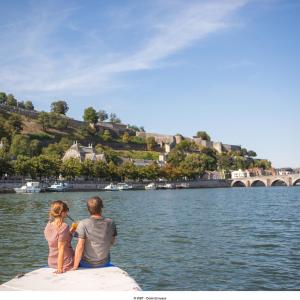
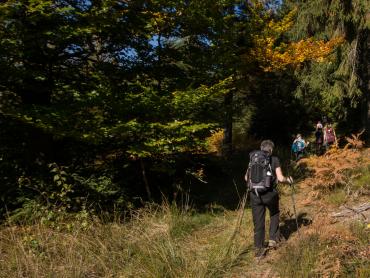
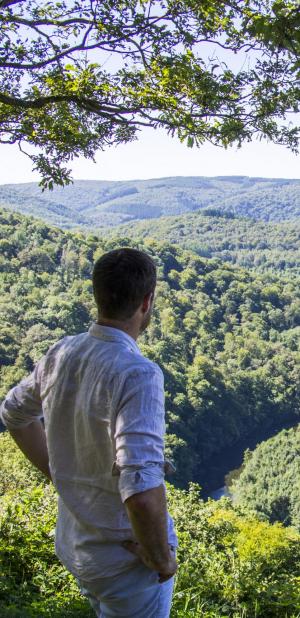
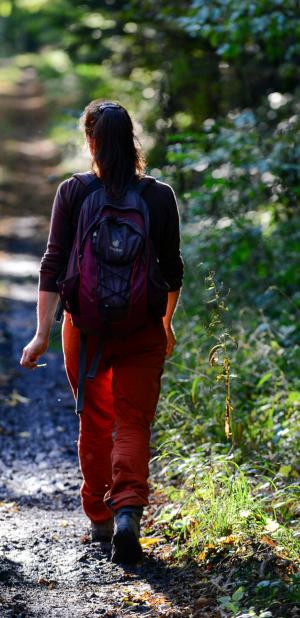
De Belgische Ardennen strekken zich uit over de provincies Namen, Luik en Luxemburg, en een stukje van de provincie Henegouwen. Hier vind je dus volop mogelijkheden om te wandelen! In het bos, door de velden of de stad, langs het water of over rotsachtige bergkammen… Er is voor iedereen een wandeling!

Practice type
Walking
Promenade des Hauts de Lesse

Signalétique (EN)
Pedestrian - Diamond - Yellow
Walking
Difficulty
Dist.
11.2 km
Practice type
Walking
Show more information
À proximité
Nearby tours
Nearby of points of interest
Map background choice

IGN Map

Aerial Photos / IGN

Slope Map (IGN Plan)

Map 1950 / IGN

State Major Map (1820-1866)

Open Street Map
Lat : 50.08141Lng : 5.2191
Coordinates copied

Maison du Tourisme de la Forêt de Saint-Hubert
Author
15
Place du Marché
6870 Saint-Hubert
6870 Saint-Hubert
Grotte Notre-Dame de Lourdes
Places of interest
Chemin de la Grotte 6927 Resteigne
L'église Notre-Dame de Resteigne
Places of interest
Rue du Centre 6927 Resteigne
Chez Dindin
Catering
147 rue de la Carrière 6927 Resteigne
Lesse Capade
Catering
155 rue de la Carrière 6927 Resteigne
La Cathédrale
Catering
25 Grand Rue 6927 Resteigne
Chez Boubou - Bar des Brûlins
Catering
154 Les Brûlins 6927 Resteigne
Le Campagnard
Catering
5 rue Grande 6927 Tellin
The Calestienne
Places of interest
Now we're heading back towards Belvaux, the charming little village of the Calestienne area where we started our walk. But was does Calestienne really mean?The southern part of the Famenne, between the schist-laden Famenne soil and the Ardennes, is called the Calestienne, which is where you are now. The Calestienne area is a narrow strip of only a couple of miles long which stretches out across the entire breadth of Wallonia, from Chimay to Couvin in the west, to Hamoir, Ferrières and Aywaille in the east, even passing through Givet (in France), and, Beauraing, Rochefort, Marche-en-Famenne, Hotton and Durbuy. The word Calestienne was invented by botanists who were so impressed by the local flora - that is incomparable to anything found in the adjacent areas- that they thought it would be a good idea to give this small but singular territory its own specific name. The etymology of the world Calestienne (from the German word ‘Kalkstein’, limestone) refers to the limestone that you have had the pleasure of admiring on the façades in the village and that constitutes most of the hills that encircle the Lesse Valley.It’s the physical and chemical properties of this same limestone that led to the creation of the famous caves of Han-sur-Lesse.
Rue des Pairées 6927 Tellin
L'arboretum de Tellin
Places of interest
Mont du Carillon 6927 Tellin
Le village de Resteigne
Places of interest
6927 Resteigne
Les vestiges de l'ancien village disparu de Marchimont
Places of interest
6927 Resteigne
Edmond d'Hoffschmidt's grave
Places of interest
Rue des Ecoles 6927 Resteigne
L'ancien moulin du XVIIIème avec roue
Places of interest
143 Rue du Moulin 6927 Resteigne
Aire de pique-nique de la Passerelle du moulin de Resteigne
Services
6927 Resteigne
Chasse Totemus : Au carrefour de la nature et du patrimoine
Places of interest
146 Rue de la Carrière 6927 Resteigne
Le Rocher d'Ellinchamps
Places of interest
6927 Resteigne
Les Pairées
Places of interest
Rue de la Carrière 6927 Resteigne
Resteigne - Château de Resteigne
Places of interest
Rue de la Carrière 6927 Resteigne
Former Resteigne stone quarry
Places of interest
156 Chemin de Chéfiris 6927 Resteigne
Aire de pique-nique de l'Office du Tourisme
Services
21 Rue Grande 6927 Tellin
Viewpoint from the Rocher à pic rock
Places of interest
6927 Resteigne
AlertAlerts
Powered by Cirkwi - Read Terms of Use